Long Live the Dead Tree Book
Why I'm an ardent fan of paper books.
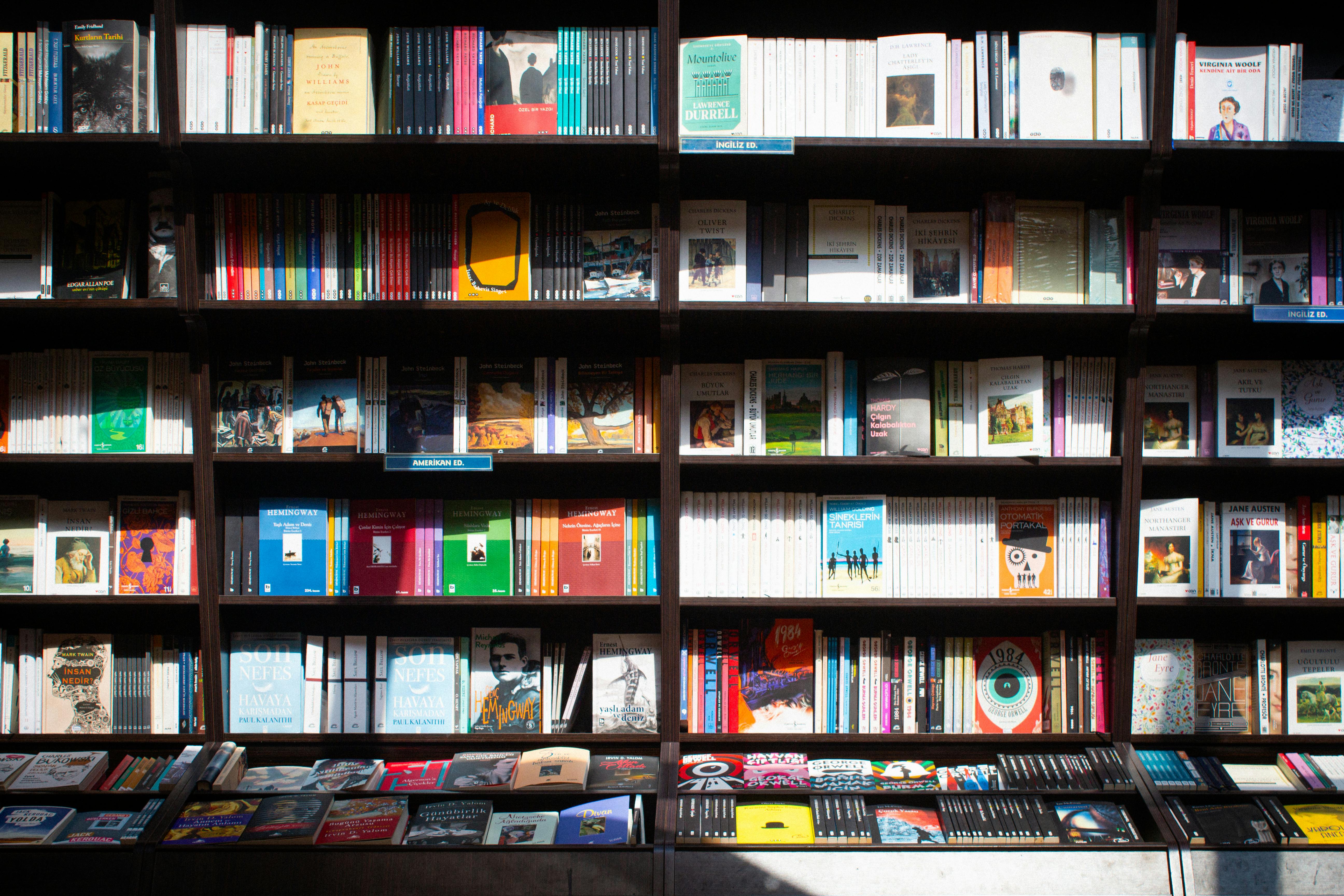
I love paper books. There I’ve said it. In the age of the Kindle, tablets, and other devices which can be used to read e-books, I can proudly say that I am enamoured with dead-tree books. E-books have their place, of course, and can’t be beat when it comes to searchability, portability, and the absolutely miniscule amount of space required to store them. But they are beaten hands down by paper books when it comes to the sensory experience.
There is nothing like holding a brand new or new to me hardcover book, and touching and seeing the colour and design of the dust jacket, and then carefully reading the text on the outside and on the inner folds. There is a joy that comes from feeling its heft, or being surprised at the lack of heft given its size. There is also the new book smell, or if it is used, varying types of smells based on the age of the book and the location where it was stored. Books which have been stored well, and which consequently aged well, have a slight musty aging paper aroma. Books which were less cared for, and perhaps dusted less frequently have the unmistakable dusty book funk which can set off allergies. Sneezing and light-headedness aside, the smells add to the character of physical books. Everyone of them has a history, and a story to tell if they could only speak beyond the words written on their pages.
Another sensory pleasure which is common to all paper books is experiencing the different types of paper and their quality or lack thereof. Mass market pulp fiction tends to have the lowest quality paper from what I’ve seen thus far. But, with the pulp fiction genre being what it is, that is understandable. Textbooks and technical materials produced by established publishers tend to have better paper quality, especially the older texts. (The quality of some of the newer technical books, even from established publishers, seems to have gone down in recent years however). I just love it when a technical book has thick, high quality paper with a somewhat glossy finish. It makes for a very pleasant reading experience.
Books printed on high quality paper with just the right balance between the darkness of the ink and the colour of paper, be it a soft baige or off white, are very easy on the eyes. I would even dare say, a lot easier on the eyes than even a Kindle. As a Kindle owner, I can say that the Kindle comes very close to simulating the paper experience, and I was very impressed when I purchased one of the first models released many years ago. However, as time has gone on it has lost it charm and I’ve found myself with eye strain after reading on it for extended periods. Recently, I’ve found it a lot easier to read, without significant amounts of discomfort, from dead-tree books, and I’ve also enjoyed placing my fingers at the bottom of the page I’m reading in anticipation of finishing it, so that I can turn it.
When turning pages in paper books, there is the lovely little sound of paper moving, but it almost always never sounds completely right when simulated on e-reader devices and apps. I think the reason why it sounds off is because the same sound file or combination of sound files are used for simulating page turning noises, and so it doesn’t feel as authentic. This is a minor flaw in the apps which I think can be remedied with a bit of code. In any case, the way paper sounds when it’s being flicked is soothing if you’re really enjoying the content of the book you’re reading. I’ve also found that being able to turn actual pages allows me to have a better sense of where I am in the book, and how far I have to go to finish it. Even though e-readers give positions, page numbers, and completion percentages, I’ve found that it’s not quite the same as being able to see and feel it as you progress through the book.
And the last reason why I love paper books is being able admire how they look on shelves after I’m done stacking them. There is nothing like a shelf filled with books you’ve read, partially read, or plan to read. And there is nothing like a seeing a collection of books by the same author lined off in a tidy row. E-readers make it possible to have a large library stored on a device which is no bigger than a small owners manual, and this is great. But seeing your books grouped into collections on a screen doesn’t hit the same way as seeing them on a bookshelf ably supported by some nice bookends.
My reasons for prefering paper books may seem shallow and irrational but that’s just me as a book lover. For practical and economic reasons, I will continue to have and maintain a collection of e-books, but paper books where possible and practical will always be my first choice. Long live the dead tree book!
   |